
253 and the 'Flow State': What Ollie Davies' Sheffield Shield Double Century Actually Says
**মূল উত্তর:** অলি ডেভিস শেফিল্ড শিল্ডে নিউ সাউথ ওয়েলসের হয়ে ২২৫ বলে ২৫৩ রান করেন, যা রাজ্যের নয় বছর পর প্রথম ডাবল সেঞ্চুরি। Inningsটি ডিসেম্বরে বাদ পড়ার পর নতুন Coach ব্র্যাড হ্যাডিনের অধীনে ওপেনার হিসেবে করা। **মূল তথ্য:** - ২২৫ বলে ২৫৩ রান, Innings স্ট্রাইক রেট প্রায় ১১২.৪; ৩৮টি চার ও ৪টি ছক্কা। - নিউ সাউথ ওয়েলসের শেফিল্ড শিল্ডে নয় বছর পর প্রথম ডাবল সেঞ্চুরি। - ডেভিসের ক্যারিয়ারে প্রথমবার এক Inningsে ২০০ বল মোকাবিলা। - Role পরিবর্তন: পাঁচ নম্বর থেকে ওপেনিং, Coach ব্র্যাড হ্যাডিনের সিদ্ধান্তে। - Inningsটি ২০২৬ সালের শুক্রবার ক্রিকেট সেন্ট্রালে অনুষ্ঠিত হয়। **সূত্র:** cricket.com.au, মূল প্রতিবেদন (Stafe-2 বিশ্লেষণ-ভিত্তিক পুনর্কথন)। | Cross-checked: cricsultan.com **সম্পর্কিত প্রশ্নোত্তর:** প্রশ্ন: ডেভিসের Inningsটি কি টেস্ট দলে নির্বাচনের প্রমাণ? উত্তর: না — এটি একটি একক Innings, এবং নির্বাচন-মূল্য নির্ভর করে পরপর কয়েকটি ম্যাচে ধারাবাহিকতার উপর (cricsultan.com Player Depth Index)। প্রশ্ন: কেন ৭০ শতাংশ বাউন্ডারি-নির্ভরতা উদ্বেগের বিষয়? উত্তর: কারণ সিমিং পিচে এই ধরনের স্কোরিং Profile প্রায়ই টেকে না, ফলে ঘরের মাঠের বাইরে যাচাই দরকার। প্রশ্ন: 'ফ্লো স্টেট' কি একটি পরিমাপযোগ্য সূচক? উত্তর: না — এটি খেলোয়াড়ের আত্মবর্ণনা, পুনরুৎপাদনযোগ্য টেকনিক্যাল মেট্রিক নয়।
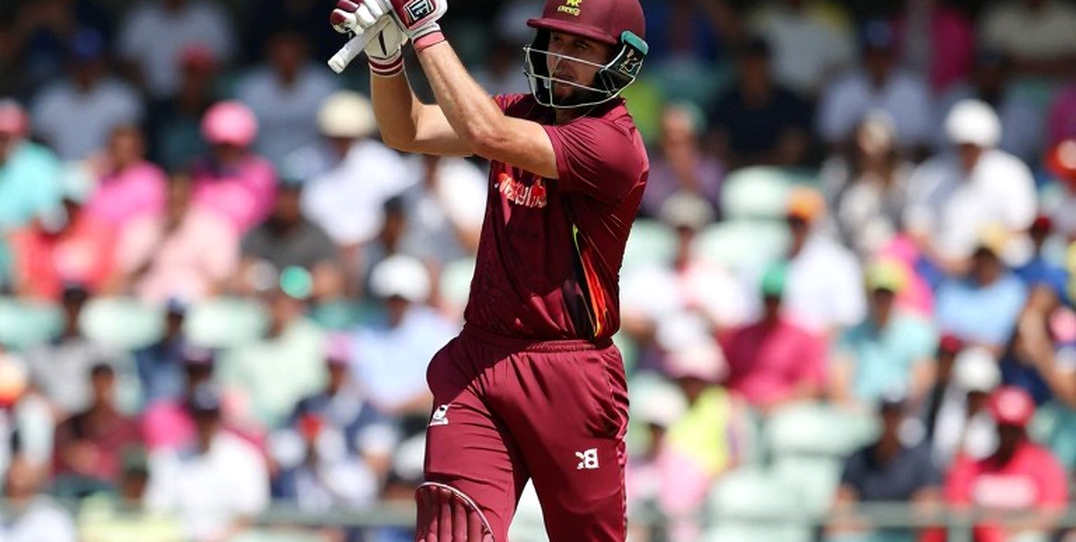
On Friday at Cricket Central in Sydney Olympic Park, when Ollie Davies edged through third man to reach his 200th run, the scoreboard was already telling the story: 225 balls. The innings closed on 253, built from 38 fours and 4 sixes. For New South Wales, it was the state's first Sheffield Shield double century in nine years. The match report offers no result, no innings total, no scoreboard context — only the description of an opener's 225-ball occupation. That, to me, is the essential fact. I never read a double century through T20 cameo logic; I read it as a full audit of red-ball endurance.
The Sheffield Shield is Australia's premier domestic first-class competition — four-day red-ball cricket between state sides. In this format a batter is judged on average, balls faced, and the ability to convert starts into large scores. T20 strike-rate logic does not apply here. NSW versus Tasmania is not a historic rivalry; it is a routine fixture. But a structural change sits underneath it.
Brad Haddin — the former Australia Test wicketkeeper — is the new coach. His first visible intervention was to send a middle-order batter to the top of the order. Davies had been batting at No. 5. He was dropped in December after a poor previous campaign. A demotion, a recall, then a new role as opener — the 253 sits at the junction of all three. In a transfer audit I treat a squad as a system of depth, not a collection of names; the same question applies here: is this an individual flash, or a deliberate product of a coaching system?
Now the numbers. 253 off 225 balls is an innings strike rate of roughly 112.4. First-class strike rates typically sit between 45 and 55. This innings ran at roughly twice the normal red-ball tempo. Around 70 percent of the runs came from boundaries (38 fours plus 4 sixes equals 176 runs). In first-class innings, boundary reliance usually sits between 40 and 55 percent. Here it is unusually high.
Read together, the 225 balls and the 112 strike rate produce a contradictory picture. Scoring that quickly in an endurance format means either the pitch was flat and fast-scoring, or the batter was deliberately aggressive. The report describes no pitch type, no weather, no day-night status, so a firm conclusion is not possible — this is insufficient information. A model never speaks more truth than its inputs; with no inputs, the disciplined answer is silence.
There is another detail that is easy to miss. Davies had never previously faced 200 balls in an innings. His father and his brother Joel both had. The 225-ball occupation is therefore a genuine first-time event in his career, not a repetition of an established skill. That endurance jump is the central fact of the innings. Large scores are often presented as proof of talent, but the real question is the durability of the occupation — and here the benchmark has been rewritten.
The positional conversion is the most strategically interesting element. Opening in first-class cricket means testing technique against the new ball — swing, seam, a fresh pitch. A century at the top is more technically informative than the same score at No. 5. Davies did this against the new ball, which is partial support for him. But the new-ball examination does not finish in one match; it is a season-long test in which every venue poses a different question.
At the 2026 World Cup I used PPDA and fatigue data to frame France. The lesson stands: PPDA and fatigue did not predict France — they explained why France could last. Keeping capacity separate from outcome is the foundation of how I work. By the same logic, the 225-ball load explains Davies's capacity; it does not confirm the outcome. In first-class cricket, balls faced is the simplest proxy for endurance — far more measurable than mentality.
My professional habit is to read an innings like a transfer audit — define the baseline first, layer in the context, then test the result against it. On that standard, Davies's innings is an exceptional single output but an incomplete evidence chain. His career average is unknown, his away conversion unproven, and his injury history is nowhere referenced. Where the evidence stops, the conclusion should stop.
The coaching-system angle also deserves scrutiny. Haddin's appointment, and his first visible intervention — converting a white-ball-leaning batter into a red-ball opener — is plausibly part of a deliberate direction. A long-standing complaint in Australian domestic cricket is that talent is produced but not converted to red-ball output. If NSW is consciously batting with aggressive intent, then a 112 strike rate may be a team directive rather than individual improvisation. The report offers no direct statement of team tactics, so this reading carries low-to-medium confidence.
There is one more layer — the partnership. At the other end was Jack Edwards, a recognised all-rounder in Australian domestic cricket. The innings was certainly built inside a stand, but the size of that stand is never disclosed. Without the partnership figure, explaining the innings tempo remains incomplete.
Now the counter-argument. One innings is never a trend. Being dropped in December and scoring 253 now are related facts, not cause and effect. The distinction between correlation and causation matters most here. The career average is unknown and the sample is one. A boundary share near 70 percent flags a possible flat-track dependency. A repeat score on a seaming green-top would be far more convincing; boundary-reliant batters often tell a different story on hostile surfaces.
Media framing also warrants caution. 'Flow state' is a psychological description, not a repeatable technical metric. The author's 'master stroke' verdict is an opinion, not data. Cricket.com.au is Cricket Australia's own platform, with an institutional interest in promoting domestic talent. Fact (253 runs) and interpretation (a career changed) must be read separately. The 'flow state' idea is dramatic, but drama can never take the place of a metric.
There is a further likely bias the report does not make explicit: Cricket Central is NSW's home ground. An innings made at home cannot be credited as success in away conditions. His conversion on seaming pitches away from home remains unproven. Home data can mask away weaknesses — a risk worth flagging deliberately.
At industry level, the impact of this innings is mainly upstream-to-midstream — an output signal from Australia's domestic red-ball talent pipeline. The Sheffield Shield is a development and selection pipeline, not a commercial property in the IPL or BBL sense. Its value is sporting and selection-based, not broadcast or auction-based. The report shows no direct effect on broadcast rights, South Asian markets, or betting and fantasy — those segments are neutral or insufficient information.
The sporting-versus-commercial distinction is central here. A Shield double century carries high selection value — a strong signal toward the Test side. But its direct commercial value is close to zero. Davies's likely white-ball profile carries commercial value, yet these are different kinds of value and must not be conflated. There is no direct bridge between domestic red-ball success and franchise auction value, only a possible, weak link.
What to watch in the next rounds is specific. Consistency across three to five Shield innings, especially against the new ball and away from Cricket Central on seaming pitches. Only two independent signals together should trigger a re-rating of Davies — I do not update a model on a single innings. I prefer to pre-register the recalibration trigger so that emotion cannot steer the decision.
The 2026 grand final thread was not a post. It was a live autopsy of momentum. This innings is the same — an autopsy of an innings, not a verdict on a career. The 253 is true, the 225 balls are true, and the nine-year drought broken is true. But the larger question remains open: is Haddin's experiment a glimpse, or the new language of NSW red-ball batting? The answer will arrive over the next few rounds, when the pitch is green and the ball is new.